Notes on the transactions we make, the sectors we watch, and the conviction behind both.
How public markets are repricing growth in the AI era
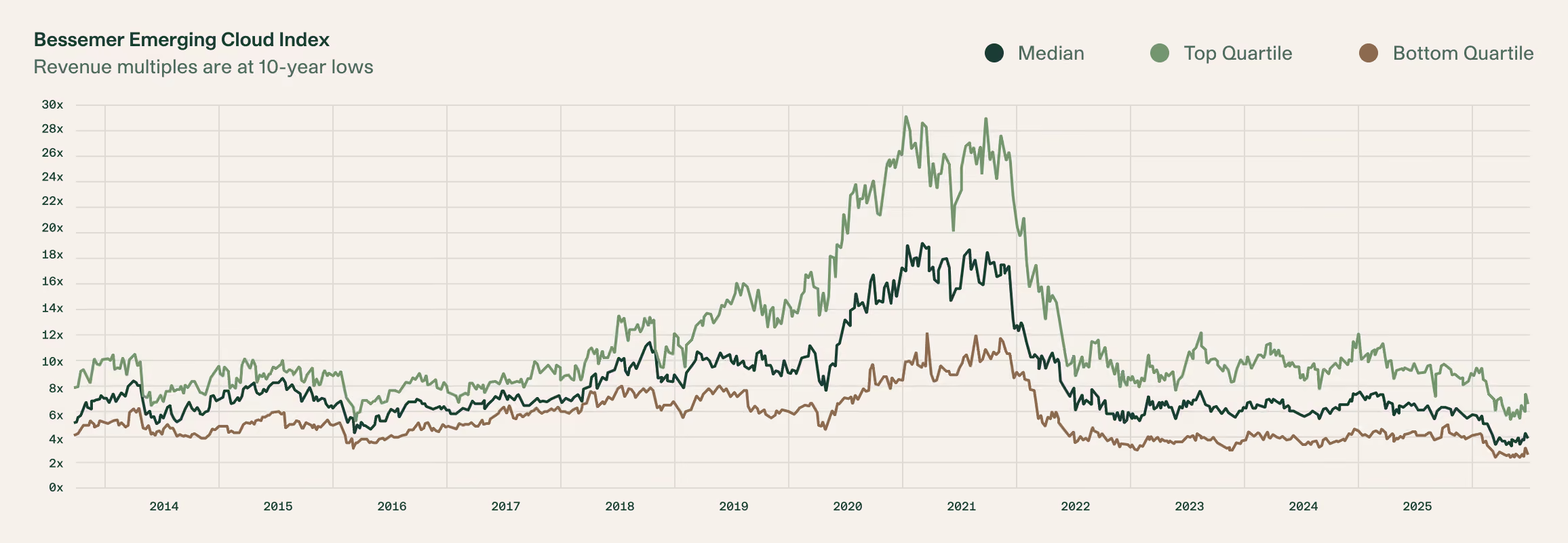
It has been a tough year for public software stocks. The Bessemer Emerging Cloud Index is at a 10-year low. At its worst, the recent sell-off took revenue multiples down by roughly 40%, despite forward growth estimates rising for the group.
Management teams came out firing: new AI features, AI-revenue disclosures, faster profitability ramps. It didn’t matter. Guidance up, stocks down. Fifteen years after Marc Andreessen said, “software is eating the world,” AI is apparently eating software.
The real reason AI upends terminal value
The real concern is not that a 20-year-old will vibe code a Salesforce replacement over a weekend or that banks will start building their own marketing suites. That is the Twitter version of the bear case and it fails scrutiny. The more defensible concern is what happens when sophisticated engineering teams, at companies already building production-grade software, go all-in on AI-assisted development. There are two stresses. The first is on the production side: the resource intensity of developing software collapses toward the incremental Claude tokens needed to produce it. Cycles shorten. Feature parity arrives faster. Competitive intensity rises, differentiation narrows, and pricing power falls.
This is essentially a commoditization argument, and we agree with the terminal value concern it surfaces.
The stress is universal in principle, but the perception is that it hits front-end application software much harder than infrastructure: building Cloudflare with AI is still very hard; building Asana is not.
The second stress is on the consumption side: what happens when the user is no longer human. Application software spent the last decade building two user-dependent moats: accumulated human familiarity with the tool (“muscle memory”), and product design optimized for human adoption (“UX”). In a headless architecture world (no traditional user interface), where agents do the work via API, that moat goes away. Going further, the agent not only doesn’t care about ease of use, it also isn’t paying a per-seat license to operate. Now you have two additional problems: business model (how do you price) and TAM (what if my seats disappear). Together, the big story is that AI puts the entire industry structure— the moats, the distribution, the pricing models — into flux. The market is already pricing in that uncertainty, but not evenly across all categories.
The sell-off is not uniform
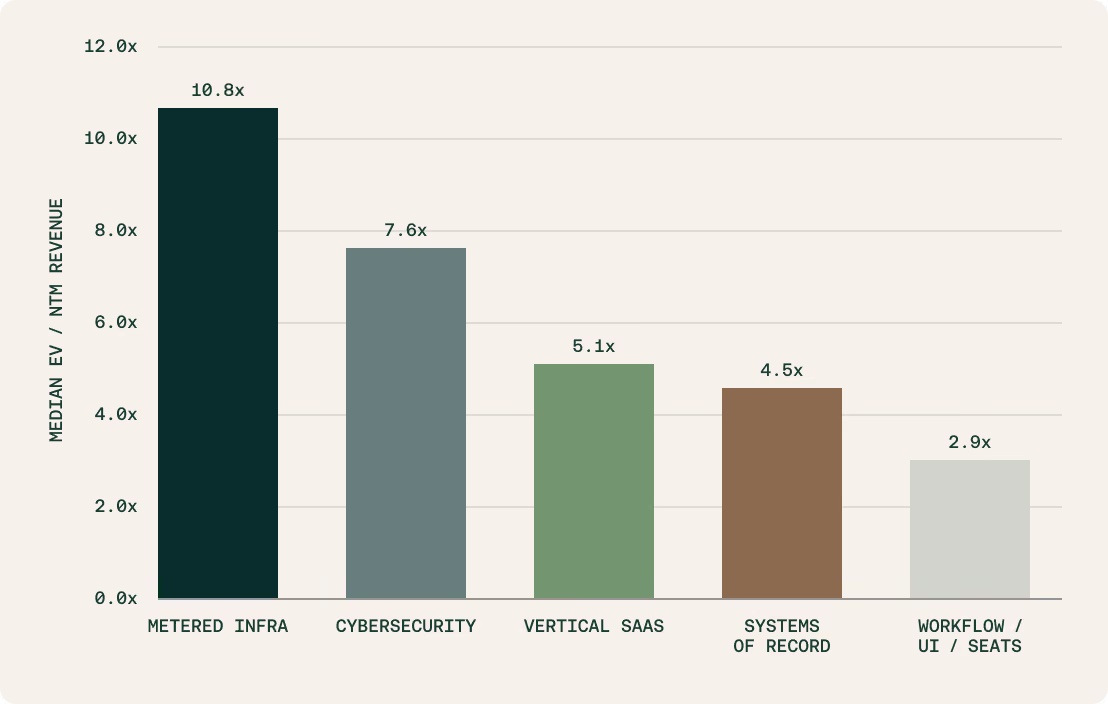
The deeper insight is in the spread between different types of software companies. Grouping the 64 public software names in our working universe into five business-model buckets, the median revenue multiples tell the story: Metered Infrastructure 10.8x. Cybersecurity 7.6x. Vertical SaaS 5.1x. Systems of Record 4.5x. Workflow/UI 2.9x. The top bucket trades at nearly four times the bottom.
Same growth, opposite multiples
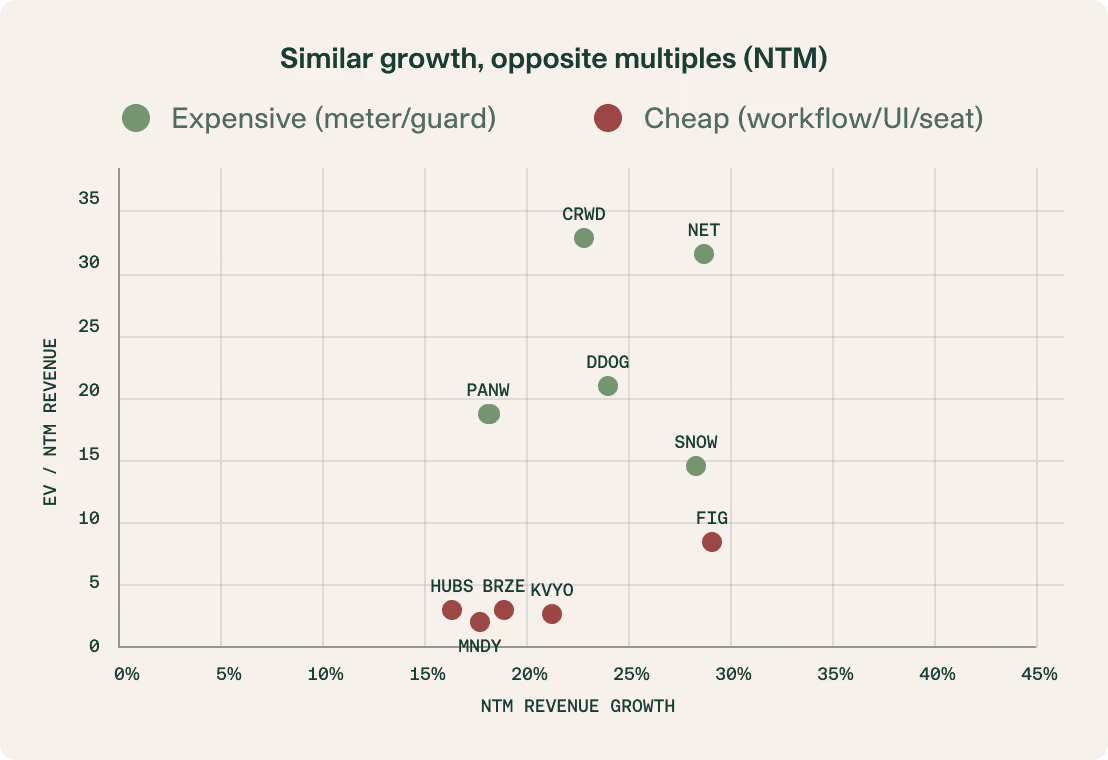
Growth usually explains the lion’s share of the spread in software multiples. Not anymore.1 Take for example Crowdstrike (CRWD) and Klaviyo (KVYO). Both are expected to grow ~23% over the next twelve months. CRWD trades at ~33x EV/revenue while KVYO trades at ~3x. Cloudflare (NET) and Figma (FIG) are both expected to grow ~30%; NET trades at ~32x, while FIG trades at ~7x. As illustrated in Exhibit 2, this pattern repeats.
1 Across the 64-name universe, a multivariate regression demonstrates that Growth and Category carry similar unique explanatory power for revenue multiples (approx. 0.10), Scale is third (0.06), while Profitability surprisingly contributes very little (0.01).
Growth is worth more in some businesses than others
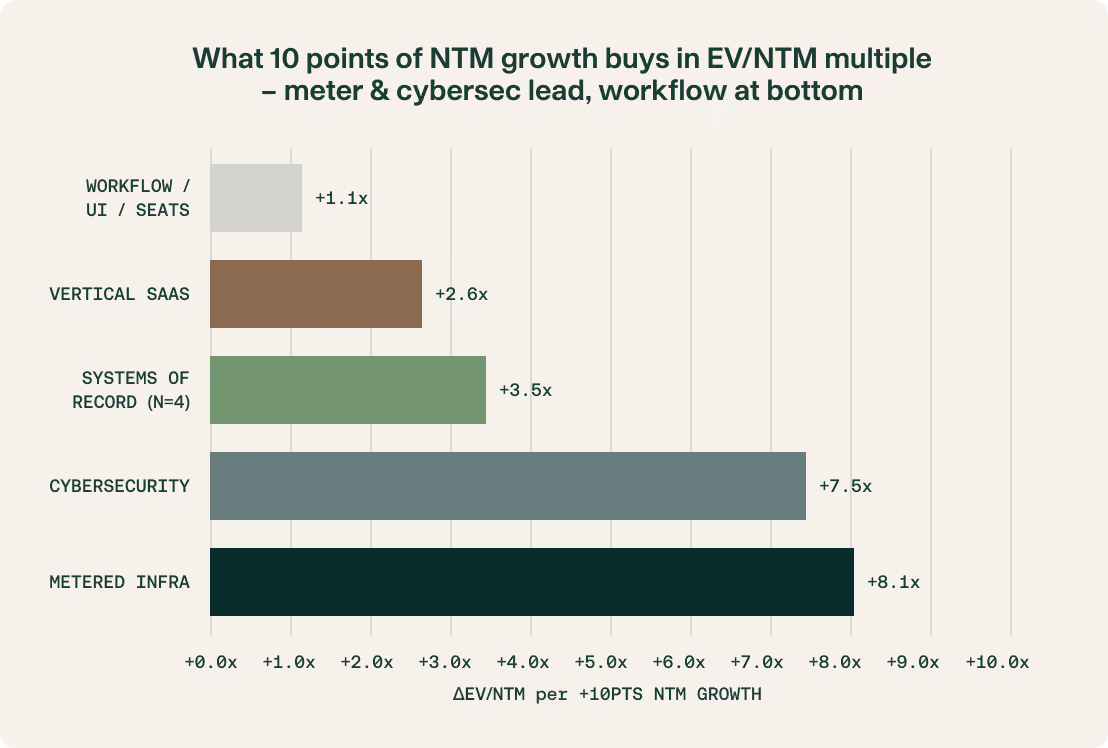
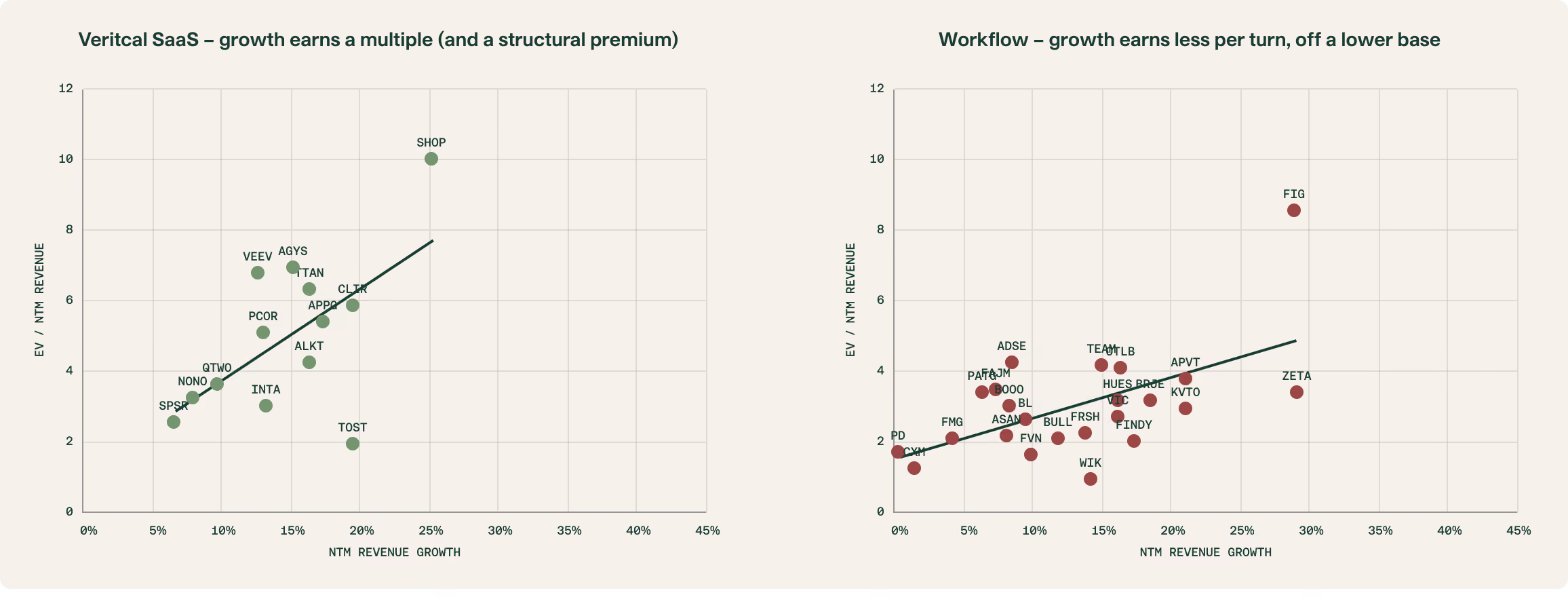
Clearly the market rewards growth differently depending on the business model it sits inside. Across the same data set we observed a percentage point of growth at a metered infrastructure company adds roughly seven times as much enterprise value as the same point of growth at a workflow software company. Cybersecurity is rewarded similarly as metered infrastructure; vertical SaaS and systems of record sit in the middle; workflow software is barely rewarded for growing at all. The pattern is not random. Metered infrastructure is software you pay for per query, per gigabyte, per API call rather than per human seat: data storage, data movement, observability, developer tooling, application performance.
The more AI work the world does, the more these businesses get paid, automatically, through usage. Notice what this means against our earlier framework: there are no seats to lose when the user becomes an agent, and the moat is in the infrastructure rather than the interface. Cybersecurity is similar, just one layer up: every new AI agent, model endpoint, and machine identity is something that needs to be secured. AI is TAM expansionary, not destructive.
The middle ground
A vertical SaaS company growing at a given rate trades almost two turns higher than a comparable workflow company. And the leaders in fast-growing verticals (SHOP, TTAN, VEEV, AGYS) trade at 6-10x against the 5.1x bucket median. The reason maps directly to our framework: a software company that knows healthcare billing, restaurant operations, or hotel revenue management cold has a moat that survives even when the UI moat doesn’t.
A vertical SaaS company growing at a given rate trades almost two turns higher than a comparable workflow company. And the leaders in fast-growing verticals (SHOP, TTAN, VEEV, AGYS) trade at 6-10x against the 5.1x bucket median. The reason maps directly to our framework: a software company that knows healthcare billing, restaurant operations, or hotel revenue management cold has a moat that survives even when the UI moat doesn’t.
Implications for us
As late stage investors, we underwrite to intrinsic value over a 2-4 year horizon – but that value is necessarily reflexive to the multiples similar businesses trade for today. The public market tells us, in real time, which kinds of businesses it is still willing to pay up for, and which it is not. Today that signal is unusually clear. Three things follow.
First, the market is aligned with our perspective that metered infrastructure and cybersecurity are two of the most interesting areas to invest. Our job, and the hard work, is to make distinctions within these categories, requiring judgement around durability, competitive position, and business quality. But at the model level, these businesses sit on the right side of both AI stresses: no seats to lose, no UI moat to evaporate, and usage that should expand as AI workloads grow.
Second, require category leadership in any vertical SaaS investment, and verify the domain moat is real. This is consistent with how we've historically approached the category and further reinforces the need to be extremely selective in this space.
And third, treat horizontal workflow software as a default pass unless the company has proven that AI is a core differentiator, not just a feature layer. There is an obvious temptation to buy low in this bucket. While we think that temptation is seductive, we also think it's wrong. The structural case against these companies is credible, and we agree: the UI dependency and pricing model itself is the problem.
Many of these businesses will have to reshape their products, pricing models, and moats at the same time, and most will not cross the chasm. Public-market multiples are not a perfect judge of intrinsic value, but they are the cleanest signal of the exit environment we ultimately sell into. Our bias should be to own what the next buyer will already know they want: scarce beachfront property, not discounted real estate where the return depends on the neighborhood coming back.